Summary:
Your floors take more abuse than any other surface in your building. Every footstep tracks in dirt, moisture, and contaminants that settle deep into flooring materials where regular mopping can’t reach them. Over time, this buildup doesn’t just look bad—it actually damages your floors, shortens their lifespan, and creates health concerns for everyone in your space.
You might be wondering if professional floor cleaning services are really necessary, or if your current cleaning routine is good enough. The truth is, there’s a significant difference between surface cleaning and the deep, restorative care that trained professionals provide. Let’s look at what actually happens when floors get the attention they deserve.
How Floor Cleaning Services Differ From Regular Mopping
Most businesses handle floor cleaning the same way—sweep or vacuum, then mop with water and cleaner. It looks clean when you’re done, and that seems like enough. But here’s what that approach misses.
Traditional mopping moves dirt around more than it removes it. When you dip a mop back into the same bucket repeatedly, you’re spreading contaminated water across your floors. The dirt you picked up from one area gets deposited in another. You’re not actually cleaning—you’re redistributing.
Professional floor cleaning services use completely different methods. HEPA-filtered vacuums capture 99.97% of particles as small as 0.3 microns, including dust mites, pollen, and allergens that regular vacuuming leaves behind. Microfiber technology traps dirt ten times more effectively than cotton mops. And most importantly, we understand which products and techniques work for your specific flooring type without causing damage.
Why Different Floors Need Different Care
Walk through any commercial building in DuPage County and you’ll see multiple flooring types—hardwood in the lobby, tile in the restrooms, vinyl in the hallways, carpet in the offices. Each one of these materials requires completely different cleaning approaches. What works beautifully on tile can permanently damage hardwood. What’s safe for vinyl can dull natural stone.
Hardwood floors need barely-damp microfiber mopping with pH-neutral cleaners. Too much water causes boards to warp and buckle. Harsh chemicals strip the protective finish, leaving the wood vulnerable to scratches and stains. Once that finish is gone, you’re looking at expensive refinishing work that costs significantly more than proper maintenance would have.
Tile and grout present different challenges. The tile itself is durable, but grout lines trap dirt, bacteria, and moisture. Standard mopping doesn’t clean grout effectively—it just pushes dirty water into those porous lines where it sits and breeds mold. We use specialized brushes and pH-balanced cleaners that actually lift contamination out of grout without eroding it.
Natural stone floors like marble and limestone are even more sensitive. Acidic cleaners—even something as common as vinegar—literally dissolve the stone surface. Many all-purpose cleaners contain ingredients that etch and dull stone over time. The damage happens gradually, so you might not notice until the finish is already compromised. Restoration work for damaged stone floors runs into thousands of dollars.
Vinyl and laminate flooring seem low-maintenance, but they’re not indestructible. Excess water seeps into seams and causes edges to lift. Abrasive cleaners scratch the protective wear layer. Steam mops, which seem like a good idea, can cause peeling and cloudiness. Once that wear layer is damaged, the whole floor loses its water resistance and stain protection.
This is why professional floor cleaning services matter. We recognize different flooring materials and know exactly which products, tools, and techniques to use on each one. We protect your investment instead of inadvertently damaging it.
The Hidden Costs of Improper Floor Cleaning
Using the wrong cleaning methods doesn’t just fail to clean properly—it actively damages your floors and costs you money. Those costs show up in ways you might not immediately connect to cleaning practices.
Floors that aren’t properly maintained deteriorate three to five times faster than floors receiving professional care. A commercial floor that should last twenty years might need replacement in just five to seven years when cleaning is done incorrectly. Replacing flooring in a commercial space costs tens of thousands of dollars—money that could have been saved with proper maintenance.
Damaged floors also create liability issues. When protective finishes wear away, floors become more slippery. Moisture that should bead up on properly sealed floors instead soaks in, creating slip hazards. Dirt and grit that should be removed by effective cleaning instead acts like sandpaper under foot traffic, wearing down surfaces and creating uneven areas where people can trip. Slip and fall accidents lead to workers’ compensation claims, potential lawsuits, and increased insurance premiums.
Then there’s the health impact. Floors that aren’t deeply cleaned harbor allergens, dust mites, bacteria, and mold spores. These contaminants become airborne every time someone walks across the floor, degrading indoor air quality. Employees take more sick days when working in environments with poor air quality. Customers notice when a space doesn’t feel clean, even if they can’t pinpoint exactly why. That affects your reputation and your bottom line.
Professional floor cleaning services prevent all of these problems. The upfront cost of proper maintenance is a fraction of what you’ll spend on premature floor replacement, liability claims, or lost business from a facility that doesn’t look and feel clean. It’s not an expense—it’s an investment that protects much larger investments you’ve already made in your property.
Want live answers?
Connect with a Spark Maids LLC expert for fast, friendly support.
Commercial Cleaning Contractors vs. In-House Cleaning
Many businesses handle floor cleaning with in-house staff or general janitorial services. They sweep, mop, empty trash, and call it done. That approach covers basic maintenance, but it doesn’t provide the deep cleaning and specialized care that floors actually need.
In-house cleaning staff typically lack training on different flooring types and proper cleaning techniques. They use whatever products are available and whatever methods seem to work. They don’t have access to professional-grade equipment like commercial floor scrubbers, HEPA-filtered vacuums, or specialized extraction tools. And they’re usually trying to clean quickly between other duties, not giving floors the time and attention required for thorough cleaning.
Commercial cleaning contractors bring expertise, equipment, and efficiency that in-house staff can’t match. We understand floor care as a specialty, not just another task on a long list. We invest in professional tools that clean more effectively and work faster. And we stay current on best practices, new products, and techniques that deliver better results.
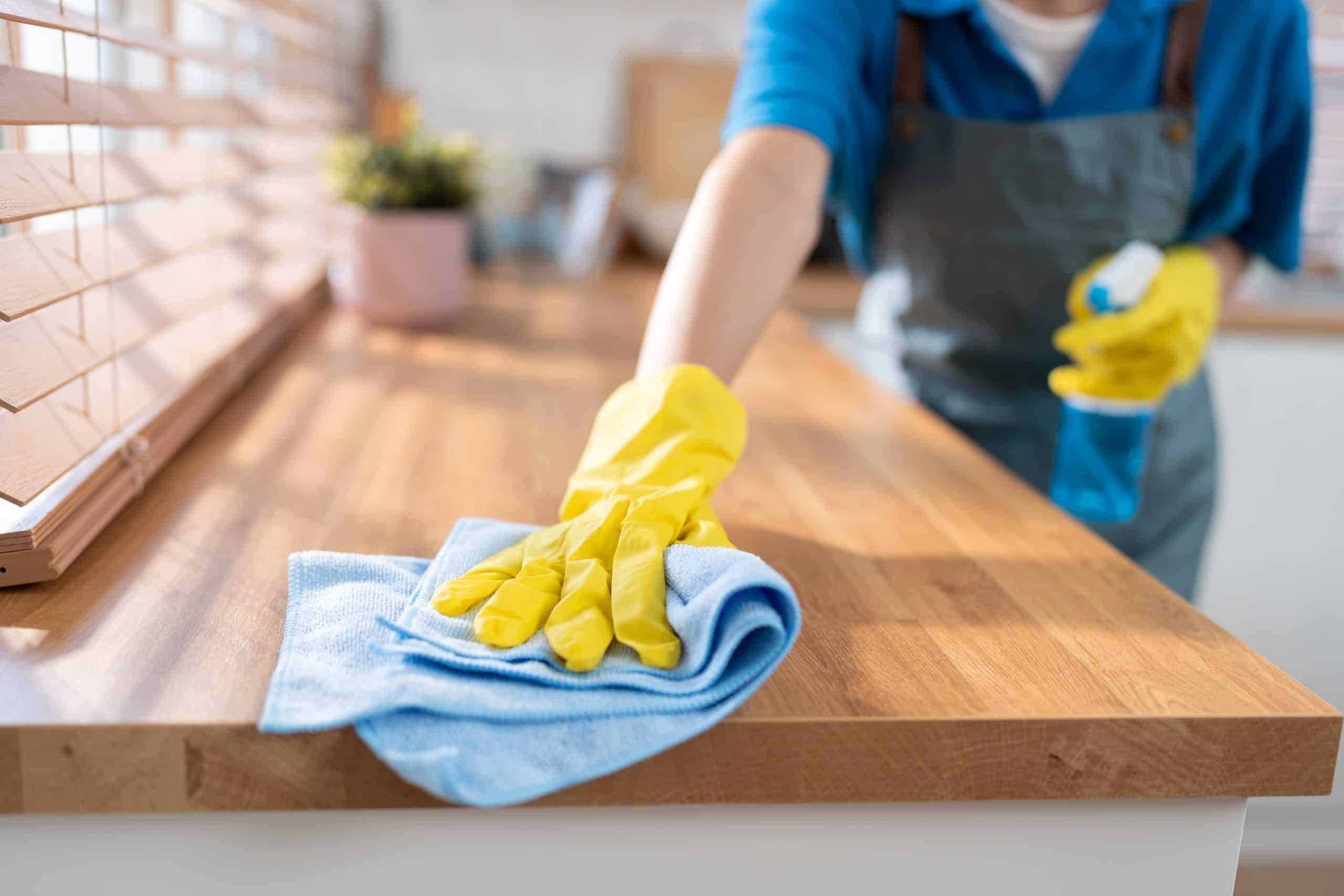
What Janitorial Contractors Actually Do Differently
We approach floor cleaning systematically, not casually. We start with a floor assessment—identifying the flooring types, current condition, problem areas, and specific needs. This isn’t something you can skip. Without understanding what you’re working with, you can’t choose the right cleaning approach.
Next comes proper preparation. We remove loose debris with commercial-grade vacuums or dust mops before any wet cleaning begins. This prevents dirt from turning into muddy residue when water hits the floor. It also prevents fine particles from scratching surfaces during the cleaning process. HEPA filtration in our professional vacuums captures allergens and fine dust that standard vacuums just blow back into the air.
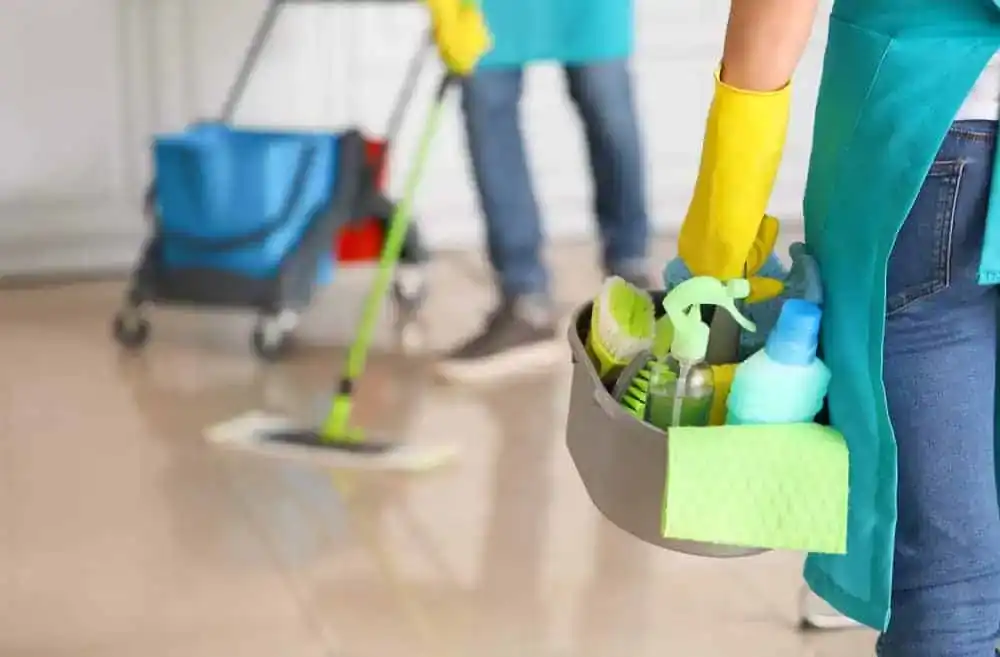
The actual cleaning process uses floor-specific products at proper dilution rates. Too much cleaner leaves sticky residue that attracts more dirt. Too little doesn’t clean effectively. We know the right ratios for different products and flooring types. We use microfiber mops that lift and trap dirt instead of pushing it around. We change cleaning solutions frequently so we’re not spreading dirty water.
For hard floors, we often use auto-scrubbers—machines that apply cleaning solution, scrub with rotating brushes, and extract dirty water in one pass. These machines clean far more effectively than traditional mopping and they work much faster. A floor that takes an hour to mop by hand can be cleaned in fifteen minutes with an auto-scrubber, and the results are dramatically better.
Grout cleaning requires specialized attention. We use brushes designed for grout lines along with cleaners that break down embedded dirt without damaging the grout itself. Sometimes we use steam cleaning or pressure washing for deep restoration. After cleaning, we apply sealers that protect grout from future staining and make it easier to clean going forward.
For carpeted areas, we use hot water extraction—commonly called steam cleaning—that removes dirt, allergens, and contaminants trapped deep in carpet fibers. Standard vacuuming only removes surface dirt. Deep extraction pulls out the buildup that you can’t see but that degrades air quality and shortens carpet life.
The difference between professional floor cleaning services and standard janitorial work comes down to knowledge, equipment, and technique. When floors receive proper care from trained professionals, they look better, last longer, and create healthier environments.
How HEPA Filtration and Eco-Friendly Products Make a Difference
Indoor air quality matters more than most people realize. Floors collect dust, allergens, pollen, pet dander, and other particles that become airborne with foot traffic. Standard cleaning methods often make this worse by stirring up particles without actually removing them. HEPA filtration changes that equation completely.
HEPA filters trap 99.97% of particles as small as 0.3 microns. That includes dust mites, mold spores, pollen, and bacteria that cause respiratory issues and allergic reactions. When we use HEPA-filtered equipment, we’re not just cleaning surfaces—we’re actively improving the air quality in your building. Employees breathe easier. People with allergies or asthma experience fewer symptoms. Everyone benefits from cleaner air.
This matters especially in commercial environments where many people share the same space. Offices, retail stores, medical facilities, schools—these are places where air quality directly impacts health and comfort. Regular use of HEPA-filtered vacuums significantly reduces airborne allergens and creates healthier indoor environments.
Eco-friendly cleaning products add another layer of benefit. Traditional cleaning chemicals can be harsh, leaving behind residues that irritate skin and respiratory systems. Strong fumes linger in enclosed spaces. Some chemicals damage flooring finishes over time. And there are environmental concerns about what happens when these chemicals wash down drains and enter water systems.
Non-toxic, eco-friendly cleaning products deliver excellent cleaning results without these drawbacks. They’re safe for children and pets—important for businesses like daycare centers, veterinary clinics, or any facility where families visit. They don’t leave chemical residues that cause reactions in sensitive individuals. And they’re better for the environment, which matters to businesses committed to sustainable practices.
Microfiber cleaning cloths and mops work hand-in-hand with eco-friendly products. Microfiber’s structure—fibers split into tiny strands that create massive surface area—traps dirt and bacteria mechanically rather than relying solely on chemical action. This means you can use less cleaning product while achieving better results. The microfibers literally grab and hold onto dirt instead of just pushing it around.
We use HEPA filtration, eco-friendly products, and microfiber technology to deliver superior cleaning while protecting health and the environment. It’s not about using more chemicals or scrubbing harder—it’s about using smarter methods that work with the science of how cleaning actually happens.
Is Professional Floor Cleaning Worth the Investment
Professional floor cleaning services protect your flooring investment, create healthier indoor environments, and prevent expensive damage from improper cleaning methods. The cost of professional maintenance is a fraction of what you’ll spend on premature floor replacement or restoration work to fix damage caused by wrong cleaning approaches.
Different flooring types need different care. Hardwood, tile, vinyl, natural stone, carpet—each material has specific requirements that general cleaning doesn’t address. We bring the knowledge, equipment, and techniques to clean every floor type properly without causing damage. HEPA filtration removes allergens that regular cleaning leaves behind. Eco-friendly products deliver results without harsh chemicals. And professional-grade equipment works faster and more effectively than standard cleaning tools.
For businesses throughout DuPage County, professional floor cleaning isn’t a luxury—it’s practical maintenance that extends floor life, reduces liability, and creates spaces where people actually want to spend time. We’ve served the area for over 15 years with advanced cleaning techniques, eco-friendly products, and the expertise to handle any flooring type properly.