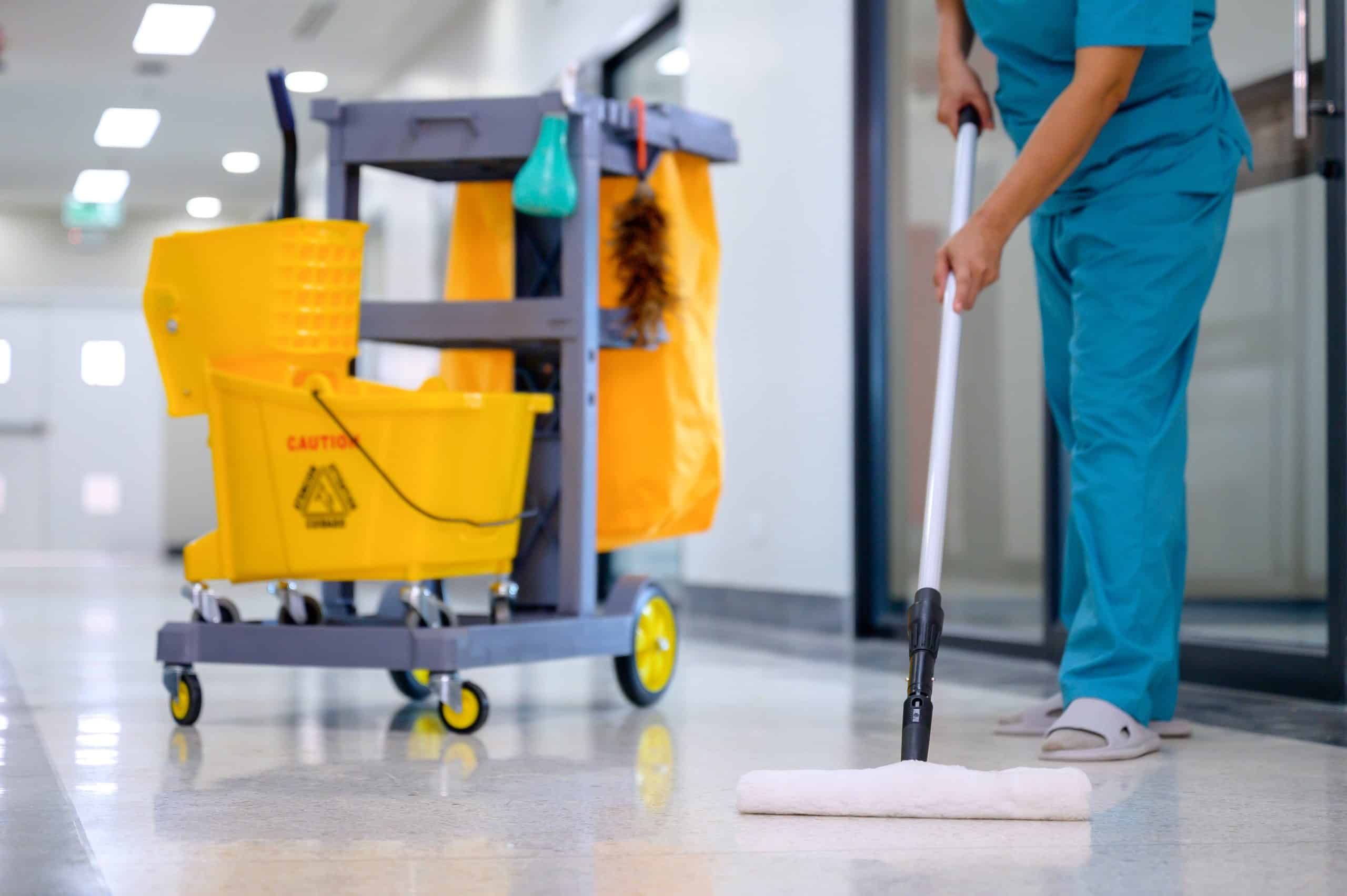
Revitalize Your Workspace in Naperville and throughout DuPage County
Is your workspace feeling a bit lackluster? Our commercial cleaning services can breathe new life into your environment, creating a vibrant and inviting atmosphere.
We’re committed to transforming your workspace into a sparkling sanctuary. Our team blends deep knowledge with advanced tools like HEPA-filter vacuums and specialized cleaning solutions. We go the extra mile in helping our customers with a pristine and healthy environment for your business to flourish.
Assessment: We begin by understanding your specific cleaning requirements.
Deep Clean: Our skilled technicians utilize advanced techniques and equipment, including steam cleaning and electrostatic disinfection, to achieve a thorough clean.
Quality Check: We conduct a final inspection to ensure every detail meets our caliber.
The Importance of Commercial Cleaning in DuPage County
Acquire a High-Performance Team with SparkMaids LLC
A clean workspace is more than just aesthetics; it’s an investment in your business’s success. Our commercial cleaning services go beyond the surface, ensuring a healthy and productive environment. From floor care to window cleaning, SparkMaids LLC has the expertise to tackle your unique needs. Contact us today for a free consultation and discover how we can transform your workspace.
Before any settlement, Naperville was home to Native American tribes. In 1641, the first Caucasian contact with Native Americans in Illinois was made with members of the Iliniwek tribe. The Iliniwek was the predominant tribe throughout Illinois at the time. They were later forced off the land by the Potawatomi tribe. The Potawatomi inhabited Naperville when the first settlers arrived. There was a major Potawatomi village at the present site of downtown Naperville, reached from Chicago by a trail that became Ogden Avenue. A minor village was near where Bailey Hobson later built his mill in 1834.
In 1831, Joseph Naper arrived at the west bank of the DuPage River with his family and friends to found what would be known as Naper’s Settlement. Among those original settlers were Naper’s wife, his brother and his wife, his sister and her husband John Murray, and his mother. Their arrival followed a nearly two-month voyage from Ashtabula County, Ohio, in the Naper brothers’ schooner, the Telegraph.
By 1832, over 100 settlers had arrived at Naper’s Settlement. After the news of the Indian Creek massacre during the Black Hawk War, these settlers were temporarily displaced to Fort Dearborn for protection from an anticipated attack by the Sauk tribe. Fort Payne was built at Naper’s Settlement, the settlers returned and the attack never materialized. The Pre-Emption House was constructed in 1834, as the Settlement became a stagecoach stop on the road from Chicago to Galena. The Pre-Emption House was the first hotel in DuPage county. After DuPage County was split from Cook County in 1839, Naper’s Settlement became the DuPage county seat. In 1843, the Illinois General assembly passed an act to incorporate the Naperville Cemetery Association. In 1855, Sybil Dunbar came to Naperville as its first recorded black female resident; she died in 1868 and was buried in Naperville Cemetery.