
Summary:
You spotted something dark in the corner of your shower. Or maybe your basement has that familiar musty smell that gets worse every spring. You’re not sure if it’s a big deal or a small one — and you definitely don’t know whether to call a cleaning service or a remediation company.
That confusion is completely normal, and it’s exactly where most homeowners in DuPage County find themselves. The good news is that a lot of mold situations are more manageable than they look. This page will help you understand what mold cleaning actually is, when it’s the right call, and how to make sure it’s done properly.
What Is a Mold Cleaning Service — and How Is It Different from Remediation?
Mold cleaning and mold remediation get used interchangeably, but they’re not the same thing. Mold cleaning addresses surface-level mold growth — the kind you find on bathroom tiles, grout, window seals, basement walls, or around HVAC vents. It’s the appropriate response when mold is visible, contained, and hasn’t worked its way into the structure of your home.
Mold remediation is a different animal. It involves containment barriers, demolition of affected drywall or flooring, industrial-grade air scrubbers, and post-remediation testing. That level of intervention is necessary when mold has spread behind walls, under flooring, or through an HVAC system — or when the affected area is large enough to pose a real structural or health risk.
The EPA draws a useful line here: if mold covers less than roughly 10 square feet — about a 3-by-3-foot patch — it’s generally something a professional cleaning service can handle. Larger than that, or if there’s been significant water damage, it’s time to bring in a remediation specialist. Knowing which side of that line you’re on saves you both money and stress.
Why Bleach Alone Won't Solve Your Mold Problem
If you’ve already tried scrubbing the mold yourself with a bleach spray and watched it come back within a few weeks, you’re not alone — and you didn’t do anything wrong. Bleach is genuinely effective at removing the color from mold on non-porous surfaces, which is why it looks like it worked. But on porous materials like grout, caulk, drywall, or unsealed concrete, bleach doesn’t penetrate deeply enough to physically remove the mold. The spores survive below the surface, the moisture is still there, and the mold comes back.
This is the core principle behind professional mold cleaning: physical removal is the goal, not just surface treatment. Industry standards are clear that killing mold with chemicals alone is not remediation — the contamination has to be physically removed for the job to be done properly. That means using the right equipment, the right technique, and the right products in the right sequence.
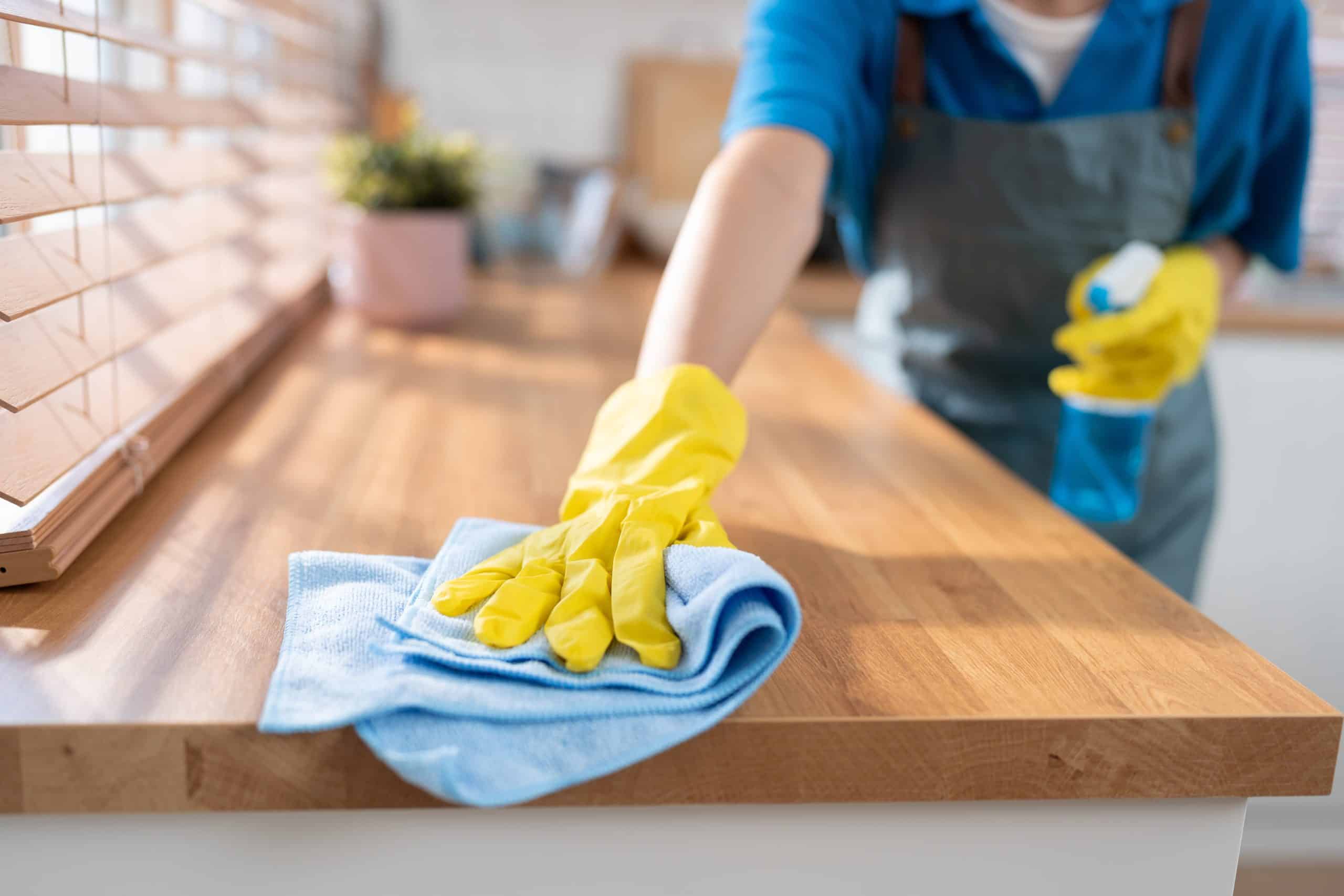
For surface mold, that typically looks like this: first, the affected area is assessed to understand the extent of the growth and identify the moisture source. Then the mold is physically removed using appropriate tools and EPA-registered antimicrobial cleaning agents. HEPA-filtered vacuums capture airborne spores during and after the cleaning process, rather than redistributing them through the air. Microfiber cloths trap and lift particles rather than smearing them across surfaces. And finally, the underlying moisture issue — whether that’s a leaky seal, poor ventilation, or high ambient humidity — needs to be addressed, or the mold will return regardless of how well the cleaning went.
Why DuPage County Homes Face Unique Mold Challenges
DuPage County’s climate creates conditions that are genuinely favorable to mold growth, particularly in the kinds of homes that dominate the local housing stock. Many homes in the area were built between the 1960s and 1990s — an era when basements were standard and ventilation systems weren’t designed with today’s energy-efficient, tightly sealed construction in mind. Older grout, aging caulk around windows and tubs, and basement walls that see moisture every spring are common features of homes across Naperville, Wheaton, Downers Grove, and the surrounding communities.
Summers in DuPage County are genuinely humid, with average relative humidity regularly climbing above 70%. Basements in this region are almost universally full basements, and they sit in soil that holds moisture from spring snowmelt and heavy rains. Spring is the highest-risk season — snowmelt raises groundwater levels, and the DuPage River and its tributaries have been known to flood in wet years, pushing moisture into basements throughout the county.
Without correcting the conditions that let mold grow in the first place, no cleaning — professional or otherwise — will hold for long. That’s why we focus on identifying and addressing the moisture source as part of every mold cleaning we do.
Want live answers?
Connect with a Spark Maids LLC expert for fast, friendly support.
Mold Removal Cleaning: What We Actually Do
When you hire our professional mold cleaning service, you’re paying for more than elbow grease. The difference between a professional clean and a DIY attempt comes down to equipment, technique, and the ability to recognize what you’re actually looking at.
HEPA filtration is one of the most important pieces of the puzzle. Standard household vacuums don’t capture mold spores — they filter out larger debris but let microscopic particles pass through and recirculate into the air. HEPA-filtered vacuums capture particles as small as 0.3 microns, which means mold spores are actually being removed from your home, not just moved around. Combined with microfiber cloths — which physically trap particles rather than smearing them — the right equipment makes a measurable difference in the outcome.
We also use eco-friendly, non-toxic antimicrobial solutions that are highly effective on surface mold without introducing harsh chemical residues into your home. This matters especially for DuPage County households with young children, pets, or family members with asthma or allergies — groups for whom indoor air quality is already a daily concern.
There’s also the question of what gets missed when mold cleaning isn’t done thoroughly. Mold doesn’t always stay where you can see it. Bathroom mold often starts in the grout and works its way behind tiles. Basement mold can spread across wall surfaces that look clean from a distance. We know where to look, how to assess what’s visible versus what might be hiding, and — critically — when to tell you that the situation is beyond what cleaning can address. That kind of honest assessment is worth more than a quick fix that doesn’t hold.

Mold doesn’t just look bad. It contributes directly to the indoor allergen load in your home — and in DuPage County, that’s already a crowded field. Between heavy pollen counts in spring and summer, dust mites, and pet dander, the air inside many local homes is working against residents who deal with allergies or asthma.
Mold spores are lightweight and airborne. Once mold is present in your home, spores become part of the air you breathe. Exposure can trigger allergic reactions, worsen asthma symptoms, and cause persistent respiratory irritation — even in people who don’t consider themselves particularly allergy-prone. A mold cleaning service, done properly with HEPA filtration and appropriate products, reduces that spore load and improves the overall air quality in your home.
Why Recurring Mold Cleaning Makes More Sense Than Waiting for a Problem
Most mold-related services are positioned as a response to a crisis — you find a problem, you call someone, they fix it. That model makes sense for structural remediation. But for the surface-level mold that most DuPage County homeowners deal with, waiting for a visible problem to develop is the more expensive approach in the long run.
Mold doesn’t appear overnight. It grows gradually in areas with persistent moisture — bathroom grout, basement walls, window frames, under-sink cabinets — and by the time it’s obvious enough to prompt a call, it’s usually been there for a while. Regular professional cleaning of those high-risk areas keeps mold from gaining a foothold in the first place. It’s the same logic as changing the oil in your car rather than waiting for the engine to seize.
A recurring cleaning relationship also means someone with trained eyes is in your home on a consistent basis — someone who knows what normal looks like and can flag something that’s changed. For families in DuPage County who already deal with seasonal allergens and aging home infrastructure, building mold prevention into a regular cleaning routine is a practical, cost-effective strategy that addresses the problem before it becomes one.
This is especially relevant for homeowners who are thinking about selling. The DuPage County real estate market is active, and mold findings during a home inspection can complicate or delay a sale. Keeping high-moisture areas clean and well-maintained throughout the year — rather than scrambling before a listing — puts you in a much better position when it counts.
Getting Started With Mold Cleaning in DuPage County
If you’ve read this far, you probably have a clearer sense of what you’re dealing with — and what kind of help actually fits your situation. Surface mold in a bathroom, a musty basement corner, or grout that’s been dark longer than it should be: these are real problems, but they’re manageable ones when addressed by the right service with the right equipment.
The key things to look for are HEPA-filtered equipment, non-toxic products that are safe for your family and pets, and a team that will be honest with you about the scope of the problem — including when it goes beyond what cleaning can address.
We’ve been serving DuPage County families for over 15 years. We know the local climate, the common moisture challenges in this area, and what actually works to keep mold from coming back. Reach out for a free quote — Monday through Saturday — and we’ll help you figure out exactly what makes sense for your home.