
Summary:
You grab a bottle off the shelf. It says “green,” “natural,” maybe even “plant-based.” You assume it’s fine. Most people do. But here’s the thing — no federal law requires cleaning product manufacturers to disclose all of their ingredients. What’s on that label is often the minimum, not the full picture.
For families across DuPage County, where kids are on the floor, pets are pressed against every surface, and allergy season hits hard twice a year, that gap in information isn’t just frustrating — it’s worth understanding. This guide is here to fill it.
What "Safe Cleaning Chemicals" Actually Means (and What It Doesn't)
“Safe” is one of those words that sounds reassuring until you start asking what it actually means. On a cleaning product label, it rarely means much at all.
Terms like “non-toxic,” “green,” and “eco-friendly” are marketing language — not regulated categories. A company can print any of them on a bottle without meeting a single third-party standard. That’s not a fringe concern. The Environmental Working Group has found that many store-bought “healthy” cleaners still contain VOCs, parabens, petroleum distillates, and hormone-disrupting compounds.
You might be switching from one set of unknowns to another without realizing it. Understanding what actually qualifies a product as safe — and what certifications carry real weight — changes how you shop and how you think about what’s being used in your home.
Which Cleaning Product Ingredients Are Actually Worth Worrying About?
A few categories come up consistently in health and safety research, and they’re worth knowing by name.
Volatile Organic Compounds, or VOCs, are gases released by many conventional cleaning sprays, aerosols, and oven cleaners. The EPA has found that indoor VOC concentrations can run up to ten times higher than outdoor levels — and since most of us spend roughly 90% of our time indoors, that adds up. Symptoms range from headaches and dizziness to longer-term respiratory issues with repeated exposure.
Phenols are common in pine-scented and “hospital-grade” disinfectants. They’re particularly dangerous for cats, whose livers lack the enzyme needed to process them. Glycol ethers appear in some all-purpose and glass cleaners and are linked to kidney and liver damage — they’re absorbed through the skin as well as inhaled, which makes floor contact a real exposure route for dogs.
Phthalates are often hidden inside synthetic fragrances and are associated with hormone disruption. Formaldehyde and benzene derivatives — found in some conventional cleaners — are classified as known or probable carcinogens with repeated exposure. And then there’s the bleach-plus-ammonia combination: mixing these two common household chemicals produces gases that the American Lung Association warns can cause chronic breathing problems and, in extreme cases, death.
None of this is meant to alarm you into throwing out everything under your sink. But if you have children or pets in the house — and a lot of DuPage County households do — these aren’t abstract risks. Children absorb toxins at a higher rate than adults because their organs and immune systems are still developing. A ten-pound cat reaches a toxic dose of certain chemicals at a fraction of the threshold for a 150-pound adult.
The exposure levels that seem harmless to you may not be harmless to the rest of your household.
What Certifications Actually Mean Something on a Cleaning Product?
Once you know what to avoid, the next question is how to find products that have been independently verified — not just self-declared safe by the company selling them.
The EPA’s Safer Choice program evaluates ingredients for human health, indoor air quality, and environmental impact. Products that carry the Safer Choice label have gone through a real vetting process, not a marketing exercise. Green Seal certification is similarly rigorous — it’s a third-party standard that covers ingredient safety, packaging, and environmental impact across the product’s full life cycle. The EWG Verified mark, from the Environmental Working Group, prohibits chemicals in the highest-concern categories and requires full ingredient transparency.
These aren’t perfect systems, and no certification covers every possible concern. But they represent a meaningful step above the unregulated “natural” label. When a cleaning service or product brand can point to one of these marks, it signals that someone outside the company has looked at what’s actually in the formula and signed off on it.
For DuPage County residents who don’t have time to read ingredient lists on every product — and most people don’t — certifications like these are a practical shortcut. They shift the research burden from you to an independent body that’s already done the work. That’s especially useful when you’re evaluating a cleaning service and want to know whether their eco-friendly claims hold up to scrutiny.
Want live answers?
Connect with a Spark Maids LLC expert for fast, friendly support.
How to Clean the Air in Your Home, Not Just the Surfaces
Most people think of air pollution as something that happens outside. But the EPA has found that indoor air can contain two to five times as many contaminants as outdoor air. A significant portion of that comes from cleaning products off-gassing VOCs long after the cleaning is done.
In a sealed suburban home during a DuPage County winter — windows closed, HVAC running — those compounds have nowhere to go. Switching to low-VOC or VOC-free cleaning products is the most direct fix. But the equipment used during cleaning matters just as much as the products.
Standard vacuums can recirculate fine particles — dust, pet dander, pollen — back into the room air. HEPA-filtered vacuums trap particles as small as 0.3 microns, which makes a measurable difference in air quality, especially in homes with allergy sufferers.
Why HEPA Vacuums and Microfiber Cloths Make a Difference for Indoor Air Quality
The connection between cleaning methods and air quality is more direct than most people realize. When you vacuum with a standard machine, fine particulates — dust mites, pet dander, mold spores, pollen — get disturbed and partially recirculated. A HEPA filter captures those particles instead of releasing them.
For DuPage County households near the Morton Arboretum corridor in Lisle, or anywhere in the county’s green suburban neighborhoods, spring and fall allergy seasons make this distinction genuinely meaningful. The difference between a HEPA vacuum and a standard one isn’t just technical — it’s the difference between a room that feels cleaner and one that actually is.
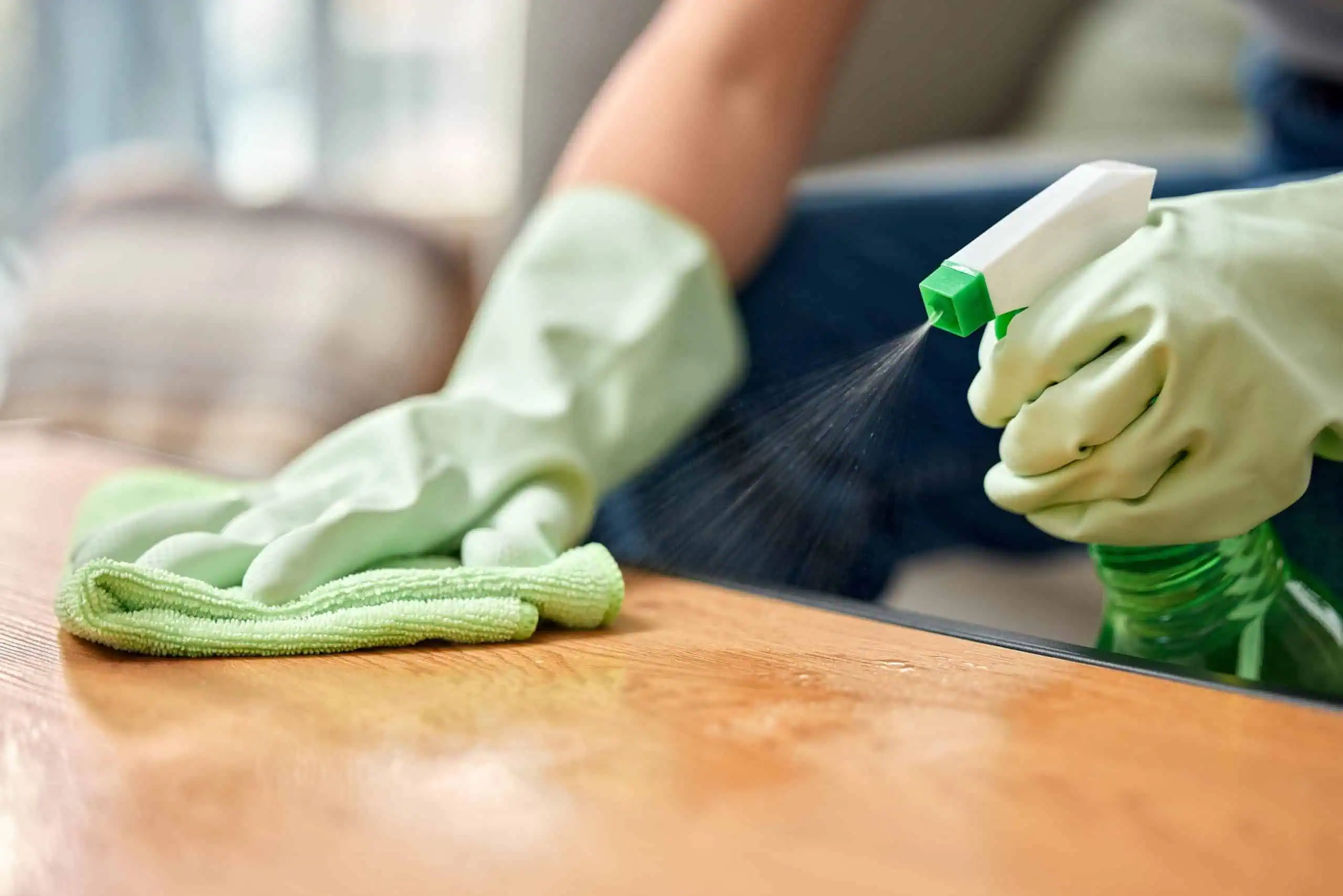
Microfiber cloths work on a similar principle. The ultra-fine fibers physically lift and trap bacteria, dust, and debris rather than just pushing them around. That means less reliance on chemical disinfectants to compensate for a cloth that’s not doing its job. When you reduce the amount of chemical product applied to surfaces, you reduce what’s left behind — on countertops, on floors, on the surfaces your kids and pets are in contact with throughout the day.
Together, HEPA filtration and microfiber cleaning represent a shift in approach: using better tools instead of stronger chemicals. It’s a more effective strategy for air quality than simply swapping one spray for another. At SparkMaids LLC, both are standard parts of how we work — not add-ons, not upgrades. They’re just how a thorough clean should be done.
What Is Zero Waste Cleaning and Does It Actually Work?
Zero waste cleaning sounds like a lifestyle choice. In practice, it’s more of a method — and it tends to produce better results than the disposable-product approach most people default to.
The core idea is straightforward: replace single-use products with reusable ones, use concentrated formulas that reduce packaging waste, and choose equipment that lasts rather than gets thrown away. Microfiber cloths that can be washed and reused hundreds of times replace paper towels. Concentrated cleaning solutions that get diluted on-site replace a cabinet full of single-use spray bottles. Refillable containers replace the cycle of buying and discarding plastic.
What surprises most people is that this approach doesn’t require sacrificing effectiveness. Microfiber cloths are more effective at capturing bacteria than standard cloths — not less. Plant-based surfactants like coco glucoside and decyl glucoside clean grease and grime without the toxicity profile of petroleum-based alternatives. Hydrogen peroxide is a genuinely effective disinfecting agent without the respiratory risks of bleach.
For DuPage County homeowners who are environmentally conscious — and many are, given the county’s sustained investment in sustainability initiatives — zero waste cleaning offers a way to align cleaning practices with broader values. But even for households where the environment isn’t the primary driver, the practical benefits hold up: less chemical residue on surfaces, less plastic accumulating under the sink, and a cleaner that doesn’t leave behind a chemical smell that lingers for hours.
We’ve built our approach around these principles because they produce a better result — not because it’s a trend. Eco-friendly cleaning done right means your home is genuinely cleaner, the air is genuinely better, and you’re not trading one set of unknowns for another.
Choosing Safer Cleaning Products in DuPage County: What to Take Away
The label on a cleaning product tells you what a company wants you to know — not necessarily what’s in it. Understanding the difference between a marketing claim and a verified certification, knowing which ingredient categories carry real health risks, and recognizing how cleaning methods affect indoor air quality are all practical tools for making better decisions about your home.
If you have children or pets, or if anyone in your household deals with allergies or respiratory sensitivities, these aren’t minor details. They’re the kind of information that changes how you think about what a clean home actually means.
If you’d rather leave the research to someone who’s already done it, we at SparkMaids LLC have been doing exactly that for DuPage County families for over 15 years. Reach out to us for a free quote — we’re happy to walk you through what we use, why we use it, and what that means for your home.