
Summary:
What Should Be Included in a Commercial Cleaning Quote
A legitimate commercial cleaning quote isn’t just a number on a page. It’s a detailed breakdown that shows you exactly what you’re paying for and what you’re not. When a provider hands you a vague estimate with one lump sum, that’s your first warning sign.
The best quotes spell out labor costs, materials, frequency, and scope in clear language. You should see line items for the actual cleaning tasks, not just “general office cleaning.” If something’s missing from that list, it’s probably going to show up as an upcharge later.
Before you even start comparing prices, make sure each quote you’re reviewing actually breaks down the work. If it doesn’t, ask for clarification. Any company worth working with will happily walk you through their janitorial service pricing structure.

Labor Costs and What They Really Cover
Labor is the biggest chunk of any janitorial contract, typically making up 50% to 70% of your total cost. But not all labor pricing is created equal, and this is where a lot of confusion starts when hiring a cleaning company.
Some commercial cleaning quotes will show you an hourly rate per cleaner. Others use a per-square-foot model. Both can work, but you need to understand what’s actually included in that labor charge. Is it just the time spent cleaning, or does it also cover supervision, training, and quality checks?
Here’s what matters: how many people will be on-site, how long they’ll be there, and how often they’ll show up. If a quote says “two cleaners, three hours, five nights a week,” you can do the math. If it just says “nightly service,” you’re flying blind.
You also want to know whether the rate covers things like employee background checks, uniforms, and workers’ compensation insurance. A rock-bottom labor rate might mean the company is cutting corners on vetting or training their staff. That’s not just a quality issue—it’s a liability risk for your business.
Ask whether the quoted labor rate is locked in or subject to change. Some contracts include annual increases tied to minimum wage hikes or cost-of-living adjustments. That’s fair, as long as it’s spelled out upfront. What’s not fair is a provider who quietly bumps rates mid-contract without warning.
Finally, clarify what happens if cleaning takes longer than estimated. Are you billed for the extra time, or is the job priced as a flat rate regardless of how long it takes? Flat-rate pricing gives you more budget certainty, but only if the scope is clearly defined so the provider can’t claim tasks are “out of scope” and charge extra.
Cleaning Supplies and Equipment: Who Pays for What
This is one of the most common sources of hidden fees in janitorial contracts. You assume supplies are included. The cleaning company assumes you’re providing them. Nobody clarifies it upfront, and suddenly you’re getting billed for mops, chemicals, and trash bags you didn’t budget for.
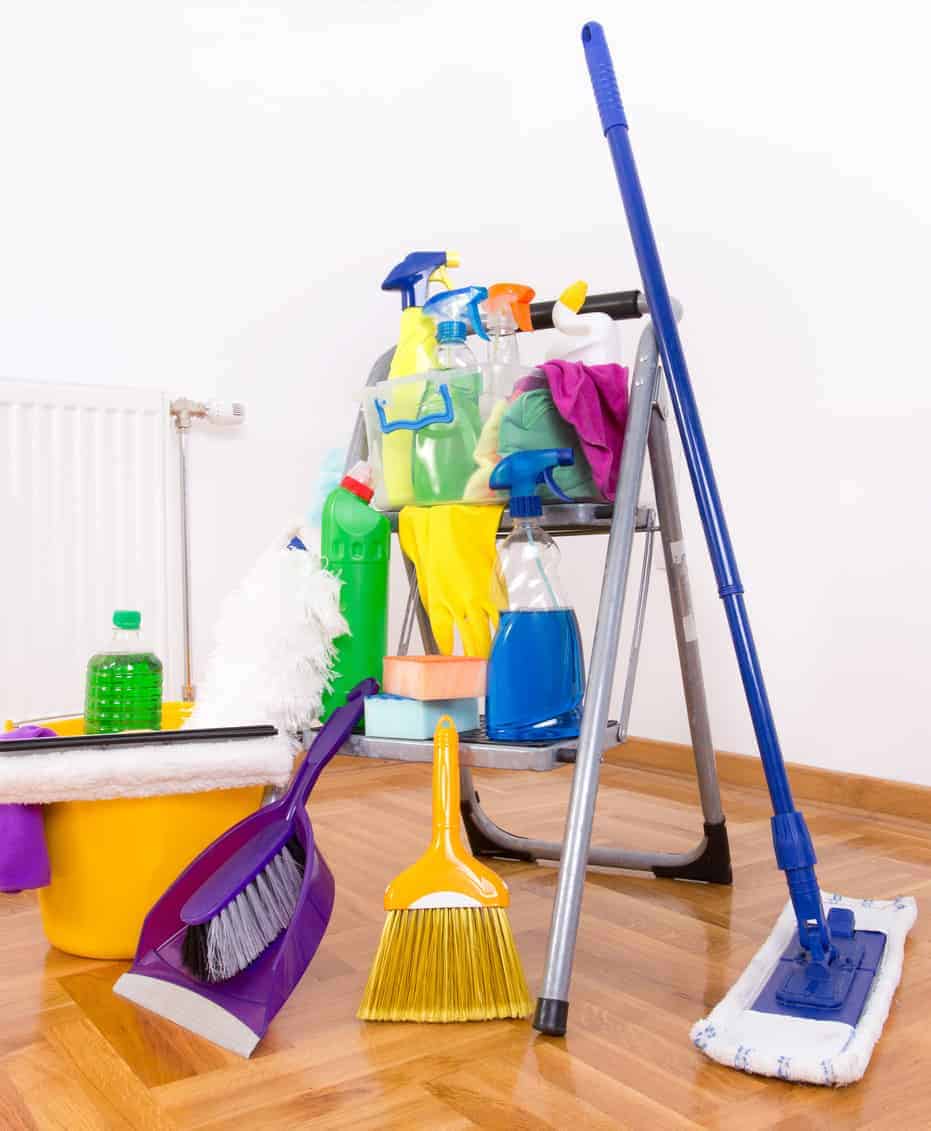
A transparent office cleaning estimate will state clearly whether the cleaning company provides all supplies and equipment or whether you’re expected to stock certain items. Typically, professional janitorial services bring their own vacuums, mops, cleaning solutions, and tools. But consumables like hand soap, paper towels, toilet paper, and trash liners? Those often fall on the client.
If the company does provide supplies, find out what kind they’re using. Are they buying the cheapest products available to keep their costs down, or are they using quality, eco-friendly options that won’t damage your surfaces or irritate employees? This matters for both results and safety.
Some contracts include a supply fee as a separate line item. Others roll it into the overall price. Either way is fine, as long as you can see it. What you don’t want is a vague “supplies as needed” clause that gives the provider free rein to bill you for whatever they feel like using.
Equipment is another area to nail down. If your facility has special flooring that requires a specific type of buffer or scrubber, who’s providing that? If windows need to be cleaned with extension poles or lifts, is that equipment included or an add-on?
And here’s a detail most people miss: what happens when equipment breaks? If the company’s vacuum dies halfway through a job, are they charging you for the time it takes to get a replacement, or is that their problem to solve on their dime?
The goal is to eliminate any ambiguity. Supplies and equipment should be accounted for in the estimate, with clear language about who provides what and how costs are calculated.
Want live answers?
Connect with a Spark Maids LLC expert for fast, friendly support.
Understanding Frequency, Scope, and Service Levels
How much do professional cleaning services cost in DuPage County? Frequency and scope are where a lot of commercial cleaning estimates get fuzzy. A provider might quote you for “weekly cleaning,” but what does that actually mean? Are they coming once a week to do a deep clean, or are they doing light maintenance weekly with monthly deep cleans?
The scope defines what tasks are performed during each visit. Vacuuming, mopping, dusting, restroom cleaning—those are standard. But what about wiping down baseboards? Cleaning interior windows? Sanitizing door handles and light switches?
If the quote doesn’t list specific tasks, you’re setting yourself up for disappointment. And probably upcharges.

What's Standard vs. What's Considered Specialty
Every cleaning company has a different definition of “standard service,” and that’s where miscommunication happens. You might think carpet cleaning is part of regular janitorial work. They might consider it a specialty service that costs extra.
Common tasks that often get classified as specialty services include carpet shampooing, floor stripping and waxing, high-dusting (like ceiling vents or light fixtures), exterior window cleaning, and pressure washing. These typically require different equipment, more time, or specific expertise, so they’re priced separately.
That’s not unreasonable—as long as it’s clear from the beginning. The problem arises when a quote lumps everything together under “complete office cleaning,” and then you find out later that “complete” doesn’t actually include the carpets or the break room appliances.
Before you sign anything, go through the quote and ask about each area of your facility. Restrooms—are those cleaned daily or weekly? Break room—does that include wiping down the microwave and fridge, or just emptying the trash? Conference rooms—are they cleaned after every use or on a set schedule?
Get specific. If your business has unique needs—like a medical office that requires disinfection protocols, or a retail space with high foot traffic—make sure those are addressed in the scope. Standard office cleaning rates don’t always apply to specialized environments, and you need to know that upfront.
Also clarify what “as needed” means. Some contracts include language like “additional services available as needed.” That sounds flexible, but it can also mean surprise charges every time you request something outside the normal routine. Ask for a price list of common add-on services so you know what to expect.
Insurance, Bonding, and Liability Coverage
This isn’t the most exciting part of a cleaning estimate, but it’s one of the most important. If a janitor damages your property, gets injured on your premises, or—worst case—steals from your office, you need to know you’re protected.
A professional janitorial service should carry general liability insurance and workers’ compensation coverage. General liability covers accidental damage to your property or injuries to third parties. Workers’ comp protects you if one of their employees gets hurt while working in your building.
Some clients also require janitorial bonds, which provide financial protection if an employee steals or commits fraud. Bonds aren’t always mandatory, but they’re common for contracts with larger businesses or government entities.
Here’s the thing: insurance costs money, and reputable companies build that cost into their pricing. If you’re comparing quotes and one is significantly cheaper than the others, there’s a chance they’re skimping on coverage. That might save you money now, but it could cost you a lot more if something goes wrong.
Ask every provider for proof of insurance before you sign. They should be able to provide certificates showing their coverage limits and expiration dates. If they hesitate or can’t produce documentation, walk away.
You also want to understand what happens if there’s an incident. Does the cleaning company have a claims process? How quickly do they respond to damage reports? What’s their track record with resolving issues?
Insurance isn’t just about protection—it’s about professionalism. A company that invests in proper coverage is telling you they take their business seriously and they’re prepared to stand behind their work.
Make sure the estimate includes a line item or note about insurance and bonding. If it doesn’t mention it at all, that’s a red flag. Even if coverage is rolled into the overall price, it should be acknowledged somewhere in the contract.
How to Choose a Janitorial Service in DuPage County You Can Trust
Reading a commercial cleaning estimate isn’t about finding the cheapest option. It’s about finding the clearest one. When you understand exactly what you’re paying for—labor, supplies, frequency, scope, insurance—you can make a confident decision that protects your budget and your business.
The right janitorial partner won’t hide fees in fine print or surprise you with upcharges three months in. We’ll walk you through our pricing, answer your questions, and give you a contract you can actually understand.
If you’re a business owner in DuPage County looking for transparent, reliable office cleaning services, we bring over 15 years of local experience serving Naperville, IL and surrounding areas, plus an A+ BBB rating to every partnership. Reach out to discuss your facility’s needs and get a straightforward estimate with no hidden fees.