Summary:
Why Move-In Cleaning Services Matter for Pre-Owned Homes
Here’s what most people don’t realize until they’re standing in their empty new home in Naperville, IL or anywhere in DuPage County: move-in ready doesn’t mean sanitized. It means the previous owners probably did a quick wipe-down before handing over the keys. Maybe they vacuumed. Maybe they didn’t.
You’re inheriting whatever cleaning standards they had. And unless you were there watching them scrub, you have no idea what that means.
Professional move-in cleaning services exist because this moment—right after closing, before you unpack—is your only real shot at a deep clean. Once your couch is against that wall, you’re not moving it to clean behind it. Once your dishes fill those cabinets, you’re not emptying them to sanitize the shelves. The window closes fast.
But it’s not just about convenience. It’s about health. The previous family’s allergens are still in that carpet. Their bathroom bacteria is still on those surfaces. If they had pets, the dander is embedded in places a regular vacuum won’t touch. And if the house sat empty for weeks, dust and mold spores have had time to settle everywhere.
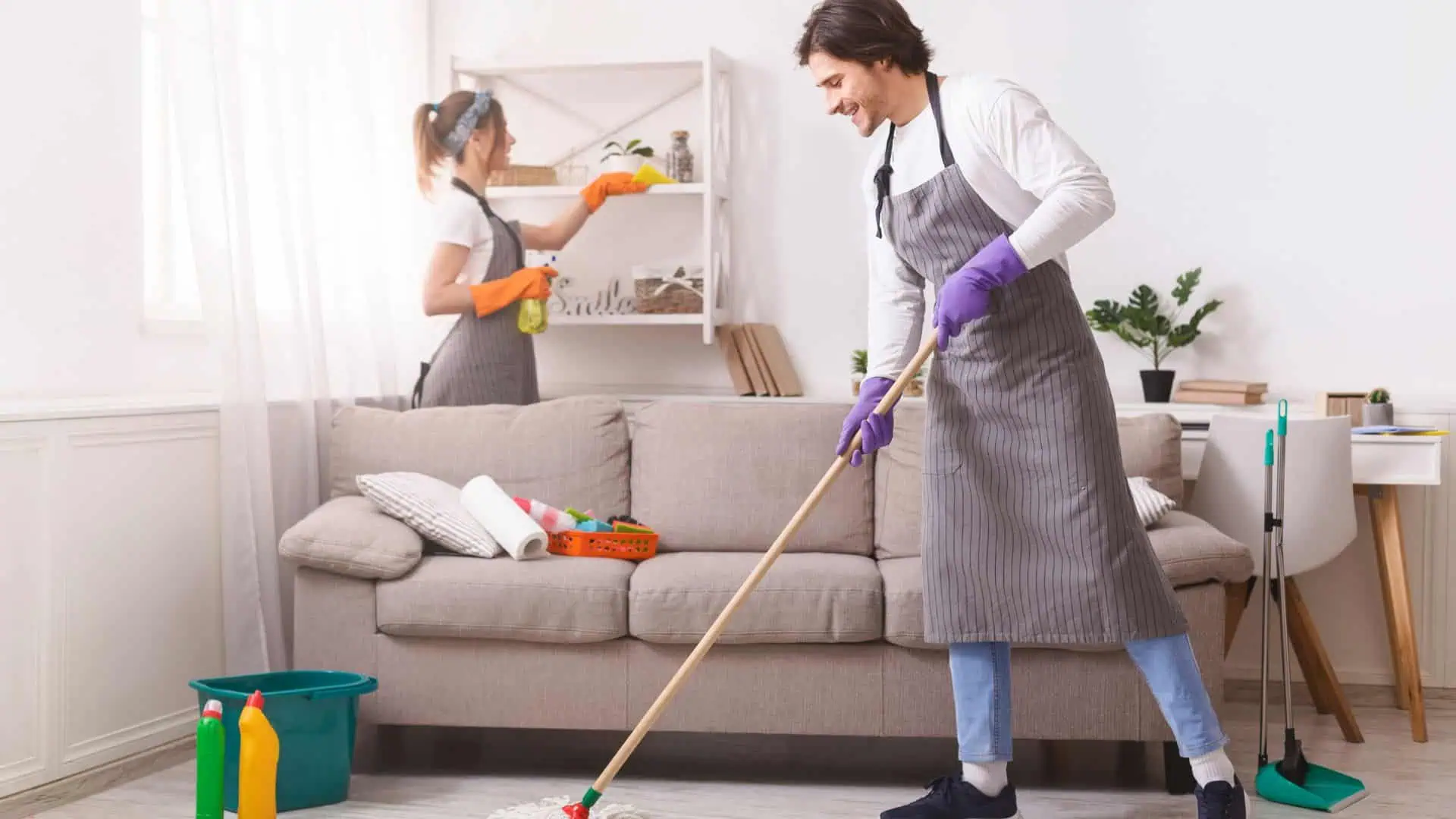
What Professional House Cleaners Remove That You Can't See
Walk into your new home and it might look clean. The floors are swept. The counters are wiped. But here’s what you’re not seeing: the microscopic particles that actually affect your health.
Dust mites are everywhere in a pre-owned home. These tiny creatures thrive in carpets, upholstery, and even bare floors. They feed on dead skin cells—and the previous owners left plenty behind. Their droppings are a major allergen trigger, especially for kids and anyone with asthma. A standard vacuum just moves them around. HEPA-filtered vacuums actually trap them.
Then there’s pet dander. Even if the previous owners didn’t have pets, the owners before them might have. Dander particles are sticky. They cling to walls, settle into carpet fibers, and hide in air vents. They can trigger allergic reactions months after the pet is gone. You need equipment designed to capture particles down to 0.3 microns—that’s 800 times smaller than a human hair.
Bacteria and germs are the obvious concern. Think about the bathroom. The kitchen sink. Door handles and light switches that dozens of hands touched during showings and inspections. Surface cleaning removes visible dirt, but sanitization requires products that actually kill pathogens without leaving toxic residue your kids or pets will absorb.
Mold spores are another hidden problem, particularly in DuPage County where seasonal humidity and Midwest winters create perfect conditions. If the house was vacant, humidity built up. If the previous owners weren’t diligent about bathroom ventilation, mold started growing. You might not see it, but it’s releasing spores into the air you’re about to breathe. We know where to look and how to treat it.
Here’s the thing about DIY move-in cleaning: you can scrub for hours and still miss what matters most. You’re working with household tools and products designed for maintenance, not deep sanitization. We use commercial-grade equipment and techniques that actually remove contaminants instead of just redistributing them.
The difference shows up in your family’s health. Fewer allergy symptoms. Less respiratory irritation. No mystery rashes from whatever chemicals the previous owners used. That’s not something you can see on moving day, but you’ll feel it every day after.
How HEPA Vacuums Transform Indoor Air Quality in Your New Home
Let’s talk about the one piece of equipment that changes everything for home sanitization: HEPA-filtered vacuums. If you’re not familiar with them, here’s why they matter.
HEPA stands for High-Efficiency Particulate Air. These filters trap 99.97% of particles that are 0.3 microns in size. To put that in perspective, pollen particles are 10 to 100 microns. Pet dander ranges from 0.5 to 100 microns. Dust mite droppings are 10 to 40 microns. A HEPA filter catches all of it.
Your regular vacuum at home? It might pick up visible dirt, but it’s also blowing microscopic particles back into the air through its exhaust. You vacuum the living room and the air quality actually gets worse for the next hour. That’s why you sometimes smell that dusty vacuum smell—you’re literally breathing what it’s spitting back out.
HEPA vacuums don’t do that. They have sealed systems that force all air through the filter before it’s released. Nothing escapes. The allergens, bacteria, and mold spores that were trapped in your carpet get locked inside the vacuum instead of recirculating through your home.
Studies back this up. Research from the University of California, Davis found that homes using HEPA vacuum systems experienced a 40 to 61 percent reduction in allergy symptoms. The American Lung Association specifically recommends HEPA vacuums for anyone concerned about indoor air quality. Consumer Reports rates them as essential for homes with pets or allergy sufferers.
But here’s what makes them crucial for move-in cleaning specifically: you’re dealing with months or years of accumulated allergens from people you’ve never met. Regular vacuuming will take weeks to gradually reduce those levels. HEPA vacuuming removes them in one thorough pass.
We use HEPA vacuums as standard equipment, not an upgrade. We go over every carpet, every upholstered surface, every baseboard. We use attachments to reach ceiling fans, air vents, and window sills. We vacuum walls—yes, walls—because dust and allergens cling to vertical surfaces too.
The impact on your indoor air quality is immediate. The Environmental Protection Agency notes that indoor air pollutant levels can be two to five times higher than outdoor levels. In a freshly moved-into home with poor previous cleaning, that multiplier gets worse. HEPA vacuuming brings those levels down before you even start living there.
For families with young children, this matters even more. Kids breathe faster than adults relative to their body weight. They spend more time on floors. They put their hands in their mouths. Every particle you remove from that carpet is one less thing entering their system.
The same goes for pets. Dogs and cats are closer to the ground, constantly inhaling whatever’s in your carpet. They lick their paws after walking on floors. If you’re bringing pets into a pre-owned home, HEPA vacuuming isn’t optional—it’s how you protect them from the previous owner’s pet dander and any chemicals that might have been used.
Want live answers?
Connect with a Spark Maids LLC expert for fast, friendly support.
Non-Toxic Cleaning Products That Protect Your Family
You removed the previous owner’s germs. Now you need to make sure you’re not replacing them with something just as harmful: toxic cleaning chemicals.
Most conventional cleaning products contain harsh ingredients that work, but at a cost. Ammonia irritates lungs. Bleach creates fumes that trigger asthma. Phthalates disrupt hormones. These chemicals don’t just disappear after you wipe down a counter—they leave residue that your family absorbs through skin contact and breathing.
This is especially concerning in a move-in situation. You’re sanitizing the entire house at once. Every surface. Every room. If you’re using conventional products, you’re saturating your new home with chemical residue before you’ve spent a single night there.
Non-toxic cleaning products solve this problem. They use plant-based ingredients and natural disinfectants that kill bacteria and viruses without harming humans or pets. They’re just as effective at sanitizing—they just don’t leave behind the toxic baggage.
We’ve switched to eco-friendly products for good reason. Our team is exposed to cleaning chemicals all day, every day. We’ve seen firsthand what happens when you use harsh products in enclosed spaces. And we know that what’s safe for our workers is safe for your family.
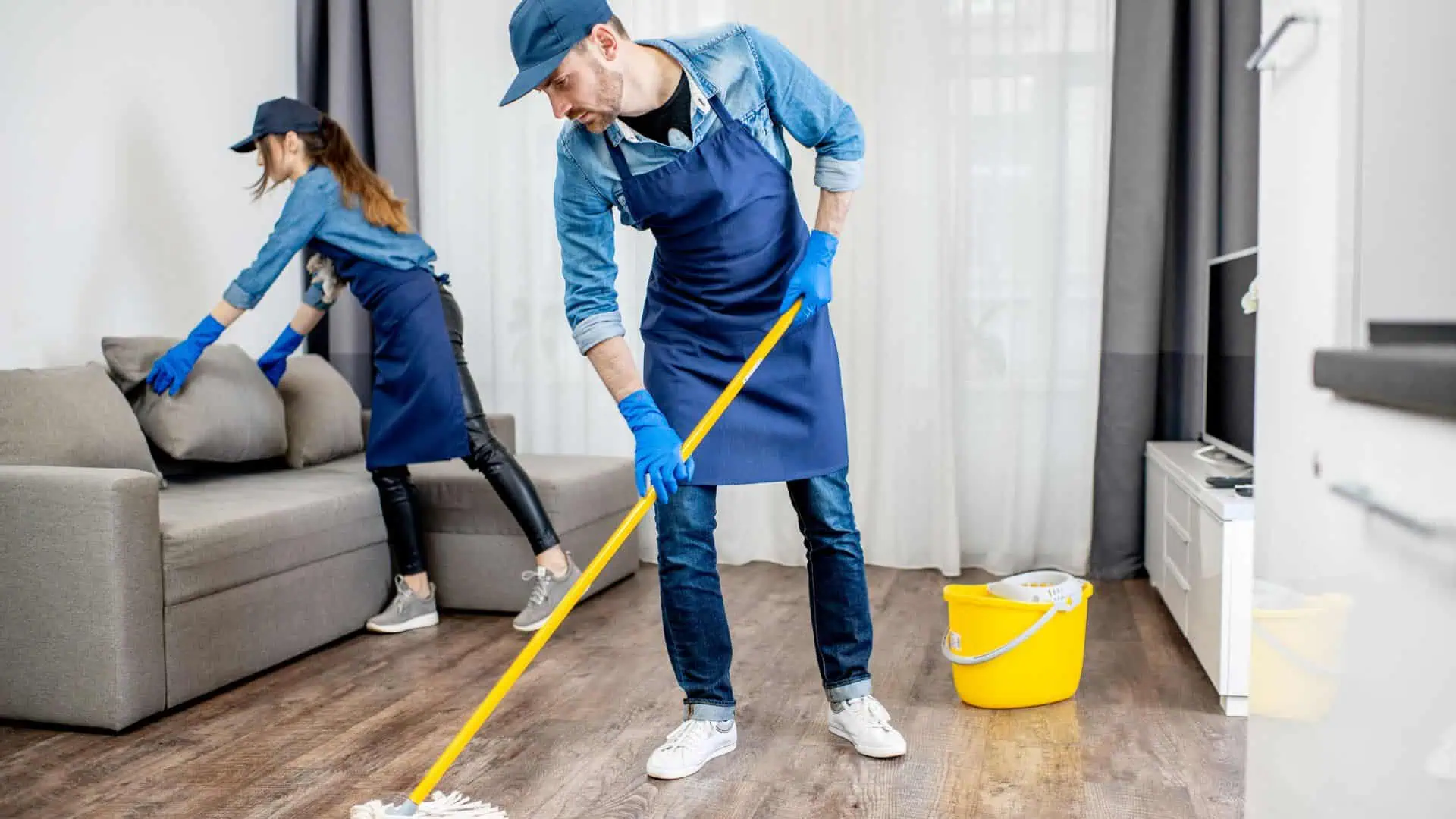
What Makes Cleaning Products Safe for Children and Pets
The label says “natural” or “eco-friendly,” but that doesn’t automatically mean it’s safe. Here’s what actually matters when you’re choosing or evaluating cleaning products for your new home.
First, look for specific certifications. Products labeled “Safer Choice” by the EPA, “Green Seal Certified,” “Made Safe,” or “EWG Verified” have been independently tested. They meet strict standards for ingredient safety. A generic “natural” claim means nothing—companies can slap that on anything.
Second, check what’s not in the product. You want cleaners that explicitly state they’re free from ammonia, bleach, phthalates, parabens, and synthetic fragrances. These are the ingredients most likely to cause respiratory irritation, skin reactions, and long-term health effects.
Third, understand that “safe for children” doesn’t mean “safe for pets.” Cats, in particular, lack certain liver enzymes that break down toxins. Essential oils that are harmless to humans can be toxic to cats. Even some plant-based cleaners can cause problems if your pet walks on a treated surface and then licks their paws.
We use products that pass all these tests. They’re formulated to kill bacteria and viruses without creating fumes. They don’t leave sticky residue that attracts dirt. And they break down quickly instead of persisting in your home’s air and surfaces.
The practical difference shows up in how your home feels after cleaning. With conventional products, you walk in and immediately smell chemicals. Your eyes might water. You have to open windows and wait for it to dissipate. With non-toxic products, you smell nothing—or maybe a light, natural scent that fades quickly. The space feels clean, not chemical.
For move-in cleaning, this matters because you’re often on tight timelines. You might be moving in the same day the cleaning happens. You can’t afford to wait hours for fumes to clear. Non-toxic products let you walk in immediately without worrying about what your kids or pets are breathing.
There’s also the long-term consideration. You’re not just cleaning once—you’re setting the standard for how this home will be maintained. If you start with non-toxic products, you establish a baseline. Your home’s air quality starts clean and stays clean. If you start with harsh chemicals, you’re playing catch-up for months trying to reduce the residue.
Some people worry that eco-friendly means less effective. That’s outdated thinking. Modern non-toxic disinfectants use ingredients like hydrogen peroxide, citric acid, and plant-based surfactants that kill 99.9% of bacteria and viruses. They meet the same sanitization standards as bleach without the health risks.
The key is using the right product for the right job. An all-purpose cleaner handles counters and sinks. A specialized bathroom cleaner tackles grout and shower tile. A floor cleaner is formulated for the specific surface—hardwood, tile, or laminate. We know which product works where, and they’re all non-toxic.
The Areas Previous Owners Always Miss During Move-Out Cleaning
Even when previous owners try to clean before moving out, there are spots they consistently overlook. These are the areas where dirt, bacteria, and allergens accumulate—and where professional move-in cleaning services make the biggest difference.
Start with inside cabinets and drawers. Most people wipe down the outside, but the inside? That’s where crumbs collected, spills dried, and dust settled for years. Kitchen cabinets especially can have sticky residue from cooking oils that attracted more dirt. You’re about to put your clean dishes and food in there. It needs to actually be clean.
Baseboards and door frames are another blind spot. These horizontal surfaces collect dust that eventually becomes a thick layer. Previous owners walked past them every day without noticing. But when you’re moving in, you’re looking at everything with fresh eyes. And more importantly, that dust becomes airborne every time someone walks by or a door closes.
Light fixtures and ceiling fans are almost never cleaned during move-outs. Look up in your new home and you’ll probably see dust coating the blades and bulbs. Every time you turn on that fan, it’s distributing months of accumulated particles throughout the room. We don’t skip the ceiling.
Window sills and tracks are grime magnets, particularly in DuPage County where seasonal weather creates condensation and moisture buildup. Dust settles in. Mold starts growing in the tracks. Previous owners might have cleaned the glass, but the frames and sills? Rarely. This is where allergens concentrate, and it’s often at a level where kids and pets interact with surfaces.
Behind and under appliances is another major gap. The refrigerator hasn’t been moved in years. The stove has grease splatter on the wall behind it. The washer and dryer are sitting on a layer of lint and dust. Previous owners aren’t pulling these out to clean—they’re hoping you don’t look. We do.
Air vents and returns are invisible to most people, but they’re circulating air throughout your home. If they’re clogged with dust, every time your HVAC system runs, it’s blowing allergens into every room. A quick vacuum of the vent covers makes a measurable difference in air quality.
Closets get a fast sweep at best. But think about what’s been in there—shoes tracking in dirt, clothes shedding fibers, items stored on shelves leaving rings and dust. You’re about to hang your clean clothes in that space. It should be as clean as the rest of your bedroom.
Grout lines in bathrooms and kitchens harbor bacteria and mold. Tile might look clean, but the grout is porous. It absorbs moisture and grows things. Previous owners scrubbed the tile surface and called it done. We use specialized brushes and cleaners to actually sanitize the grout.
The often-forgotten spaces matter because they’re where contaminants concentrate. A quick surface clean makes a room look presentable. A deep sanitization removes what’s actually making you sick. That’s the difference between a move-out cleaning done by someone who wants their deposit back and a move-in cleaning done by professionals who understand what you need.
When you hire professional move in or out cleaning services, you’re paying for attention to these details. We work from checklists developed over years of experience. We know what previous owners miss because we’ve cleaned hundreds of homes. We’re not guessing—we’re systematically eliminating every source of contamination before you move in.
Creating Your Clean Slate Before Moving Day
Your new DuPage County, IL home represents a fresh start. Not just a new address, but a space where your family will build memories, where your kids will grow up, where you’ll spend countless hours living your life. That space deserves to actually be clean—not just look clean.
Move-in sanitization isn’t about obsessing over germs. It’s about making an informed decision to protect your family’s health when you have the opportunity. Before the furniture arrives. Before the chaos of unpacking begins. Before you’re too tired to care.
Professional apartment turnover janitorial services with HEPA-filtered vacuums and non-toxic products remove what you can’t see and can’t reach with standard tools. They eliminate the previous owner’s allergens, bacteria, and chemical residue. They give you the genuinely fresh start you’re paying for when you buy or rent that home.
The investment pays off in ways you’ll feel but might not immediately connect. Fewer allergy symptoms. Better sleep in a truly clean bedroom. Peace of mind knowing your kids are crawling on floors that were properly sanitized. A home that smells fresh without chemical fumes.
If you’re moving into a pre-owned home in DuPage County, SparkMaids LLC brings 15 years of experience, HEPA filtration technology, and eco-friendly products to create that clean slate. The timing matters. The methods matter. And having professionals who understand both makes all the difference in how your new home feels from day one.