Summary:
You noticed the stain a few weeks ago. Maybe you’ve been ignoring it, or maybe you already tried something and it didn’t quite work. Either way, you’re now wondering whether to rent a machine, buy a cleaner off the shelf, or just call someone. It’s a reasonable question — and the answer isn’t as simple as “just hire a pro.” There are things you can do yourself that work fine. And there are things that look fine on the surface but quietly make the problem worse. This post breaks down both sides honestly, so you can make the right call for your couch, your fabric, and your household.
How to Clean a Couch Without Ruining It
The first thing most people do is grab whatever cleaner is under the sink and start scrubbing. That’s usually where the trouble starts. Before you apply anything to your sofa, you need to find the care tag — typically tucked under a cushion or along the bottom of the frame.
That tag has a code on it: W, S, WS, or X. W means water-based cleaners are safe. S means solvent only — no water at all. WS means either works. X means vacuum only, no liquid. Ignoring that code is the single most common DIY mistake.
Using a water-based cleaner on an S-code fabric can cause permanent water rings, color bleeding, or shrinkage that no amount of re-cleaning will fix. The tag isn’t a suggestion — it’s the manufacturer telling you exactly what the fabric can handle.
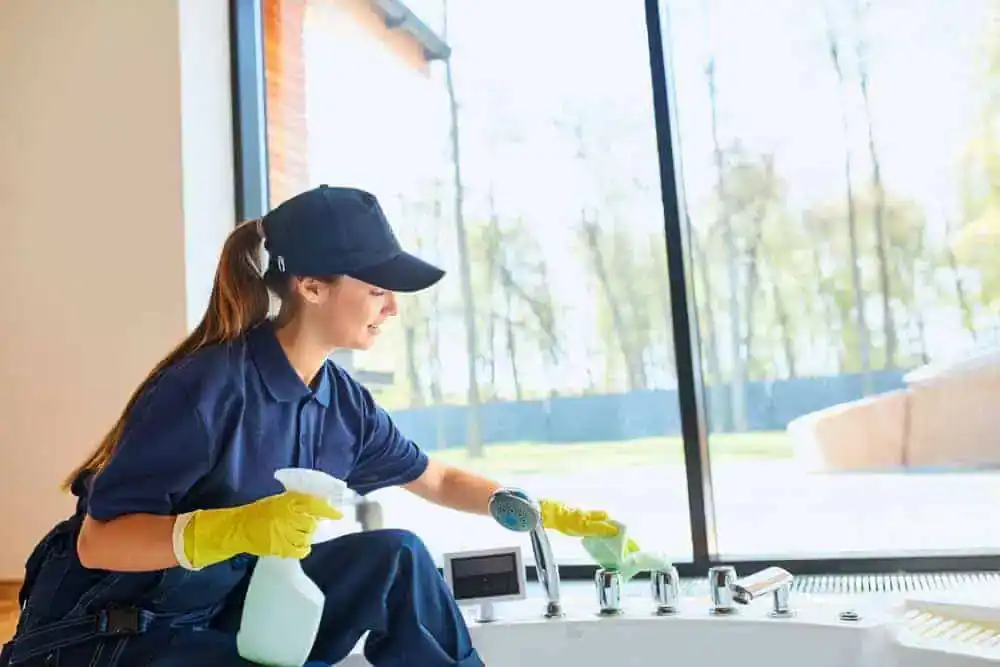
How to Clean a Fabric Couch at Home — and Where It Goes Wrong
For W or WS fabrics, a basic DIY approach can work reasonably well for surface-level dirt and fresh spills. The general process: vacuum thoroughly first to lift loose debris, then apply a small amount of water-based upholstery cleaner to a clean cloth — not directly to the fabric — and blot the stain from the outside in. Never scrub.
Scrubbing pushes the stain deeper into the fibers and can distort the pile in ways that are visible once the fabric dries. The drying step is where most DIY attempts quietly fail. If you use too much liquid, moisture gets pushed down into the cushion fill and can’t evaporate from the inside. That’s how you end up with a stain that looks gone when wet but reappears after drying — a phenomenon called wicking, where the dissolved soil travels back up through the fabric as the water evaporates. It’s also how mildew starts.
Natural fiber fabrics like cotton, linen, and wool are especially unforgiving. They can shrink, pucker, or develop a stiff texture if over-wet or dried improperly. Velvet and chenille are vulnerable to pile distortion from any kind of friction — even gentle wiping in the wrong direction can leave a permanent mark.
The damage from a well-intentioned DIY attempt on the wrong fabric often costs more to address than the original stain would have. The honest reality is that DIY couch cleaning works best when the fabric code is W or WS, the stain is fresh, and you’re working with a relatively simple upholstery material. The moment you’re dealing with a stubborn stain, a delicate fabric, a strong odor, or anything that’s been sitting for a while — the margin for error shrinks considerably.
Should You Steam Clean Your Couch Yourself?
Steam cleaning is one of the most recommended methods for fabric upholstery — most manufacturers actually suggest it as the preferred deep cleaning approach for sofas with a W or WS code. The heat helps break down oils and embedded soil, and the extraction pulls moisture back out rather than leaving it to soak in. Done correctly, it’s effective and relatively safe for many fabric types.
The catch is the equipment. Consumer-grade steam cleaners and rental machines have significantly less suction power than professional-grade units. That difference matters more than it sounds. If the machine can’t extract moisture efficiently, you’re left with wet cushions that take much longer to dry — sometimes 24 hours or more in a poorly ventilated room. That extended drying window is exactly the condition that allows mold and mildew to develop inside the cushion fill, which creates a problem far harder to fix than whatever you were trying to clean in the first place.
There’s also the chemistry side. Professional steam cleaning typically combines hot water extraction with cleaning solutions matched to the specific fabric type and soil level. Using the wrong solution — even a store-bought upholstery cleaner — can leave a residue that actually attracts more dirt over time, meaning the sofa gets dirty faster after cleaning than it did before.
If you do rent a machine, use the minimum amount of solution recommended, make multiple dry passes to extract as much moisture as possible, and keep windows open or fans running until the cushions are fully dry to the touch — not just dry on the surface.
Want live answers?
Connect with a Spark Maids LLC expert for fast, friendly support.
What Professional Sofa Cleaning Actually Involves
Professional upholstery cleaning isn’t just a more powerful version of what you’d do at home. The process starts before any cleaning solution is applied. A trained technician inspects the fabric type, checks the care code, and tests for colorfastness — meaning we verify the dye won’t bleed before committing to a cleaning method. That pre-inspection step alone catches a significant number of problems that DIY attempts skip entirely.
From there, the process involves targeted pre-treatment for stains and soiled areas, followed by deep extraction using equipment that generates far more suction than any consumer or rental unit. The result is a sofa that’s cleaned more thoroughly and dries faster — typically within two to eight hours — because less moisture is left behind.
Why DuPage County Homes Need More Than a Surface Clean
Here’s something most people in DuPage County don’t think about: your sofa is one of the highest-allergen surfaces in your home, and it looks completely clean. Illinois has one of the longer allergy seasons in the Midwest — tree pollen starts in early spring, grass pollen peaks through late spring and early summer, and ragweed takes over in the fall. That pollen doesn’t just stay in the air. It travels in on clothing, on pets, through open windows, and it settles directly into upholstery fabric where it sits until something actually extracts it.
Add in the summer humidity that DuPage County experiences. Dust mites thrive above 55% relative humidity at temperatures between 72 and 79 degrees Fahrenheit — conditions that match a typical DuPage County home in July and August almost exactly. Dust mites feed on shed skin cells, and they don’t live on top of your sofa. They live deep inside the cushion fill, which is why surface vacuuming doesn’t reach them. Roughly four out of five homes in the United States have measurable dust mite allergens, and the sofa is one of their primary habitats alongside mattresses and bedding.
For households with children, pets, or anyone dealing with seasonal allergies, this isn’t a minor issue. Pet dander isn’t visible fur — it’s microscopic skin flakes that bind to fabric fibers and stay there. Standard vacuuming removes surface debris but doesn’t penetrate deep enough to address what’s actually triggering symptoms. This is why professional cleaning frequency recommendations are every six to twelve months for households with pets, kids, or allergy sufferers — not because the sofa looks dirty, but because of what’s accumulated inside it that you can’t see.
We use HEPA-filtered vacuums as part of our cleaning process — the same filtration technology recommended for allergy-sensitive environments — because standard equipment simply doesn’t capture particles at that level. Combined with eco-friendly, non-toxic cleaning solutions that are safe for children and pets, the goal isn’t just a sofa that looks clean. It’s one that actually is.
Is Professional Sofa Cleaning Worth It for DuPage County Homeowners?
The honest answer depends on what you’re working with. If you have a straightforward W-code fabric, a fresh spill, and the right tools, a careful DIY approach can handle it. But for most real-world situations — older stains, delicate fabrics, persistent odors, visible soiling across the whole piece, or any household with pets or young kids — the gap between DIY results and professional results is significant.
Consider the math. Renting an upholstery cleaning machine typically runs between $40 and $80 for the day, including solution. That’s a reasonable spend if it works. But if the fabric is S-code and you didn’t check, or if the cushions don’t dry fully and mildew sets in, or if the wrong chemistry leaves a residue that accelerates re-soiling — the cost of the rental is the least of your problems. A sofa that cost $1,500 to $3,000 is worth protecting with a method that’s matched to the material.
DuPage County homeowners tend to own higher-quality furniture — the county’s median home value reflects a market where people invest in their homes and what’s in them. That investment is worth maintaining properly, not gambling on with a rental machine and a guess about the fabric code.
We’ve spent over 15 years cleaning homes across DuPage County, and we’re a locally based, family-owned business — headquartered right here in Naperville. We’re not a franchise operating from a call center. We’re neighbors. Our BBB A+ rating, our membership in the American House Cleaners Association, and our recognition as a Nextdoor Neighborhood Favorite in 2022 and 2023 reflect the kind of work that earns repeat customers in communities like Wheaton, Downers Grove, Lombard, and Elmhurst.
We also use eco-friendly, non-toxic products across all of our services — not as a marketing claim, but because we work in homes where kids sit on the furniture we clean and pets sleep on the cushions we treat. That matters to us the same way it matters to you.
When to DIY and When to Call a Professional Sofa Cleaner
If your sofa has a W or WS care code, the stain is fresh, and you’re comfortable working carefully with minimal moisture — a DIY approach is a reasonable starting point. Blot, don’t scrub. Use the minimum amount of cleaner. Dry thoroughly. Know when to stop.
But if the fabric is delicate, the stain has set, the odor isn’t going away, or you’re overdue for a real deep clean — especially in a household with pets, children, or allergy sufferers — professional cleaning is the more reliable path. Not because DIY is always wrong, but because the cost of getting it wrong on the wrong fabric is real and often permanent.
If you’re in DuPage County and ready to stop guessing, SparkMaids LLC offers free quotes and flexible scheduling Monday through Saturday. Reach us by phone or text at 331-320-5620.