Summary:
You installed quartz countertops because they’re supposed to be low-maintenance and durable. And they are—until a single mistake turns your beautiful surface into a cracked, discolored reminder of what went wrong. The truth is, most countertop damage happens gradually, from daily habits you don’t realize are harmful. A cleaning product here, a hot pan there, and suddenly you’re facing repair bills that climb into the hundreds or replacement costs that hit the thousands. Understanding proper quartz countertop maintenance isn’t about complicated routines. It’s about knowing what not to do, and recognizing when your surfaces need more than a quick wipe-down.
Quartz Countertop Maintenance: Essential Care Guidelines
Quartz countertops aren’t natural stone—they’re engineered surfaces made from crushed quartz crystals bound with polymer resins. That manufacturing process gives you durability and stain resistance, but it also creates specific vulnerabilities most homeowners don’t know about.
The resin that holds everything together can break down when exposed to certain chemicals or extreme heat. Once that happens, the damage is permanent. You can’t buff it out or seal over it. That’s why understanding the basics matters more than you might think.
Daily care is simple. Warm water and a soft cloth handle most messes. For stubborn spots, mild dish soap does the job without attacking the surface. But where people run into trouble is reaching for whatever cleaner is under the sink, assuming all surfaces can handle the same products.
Quartz Countertops Care and Maintenance Daily Routine
Your daily routine determines how your countertops look five years from now. The good news is that proper quartz countertops care and maintenance doesn’t require special products or lengthy processes.
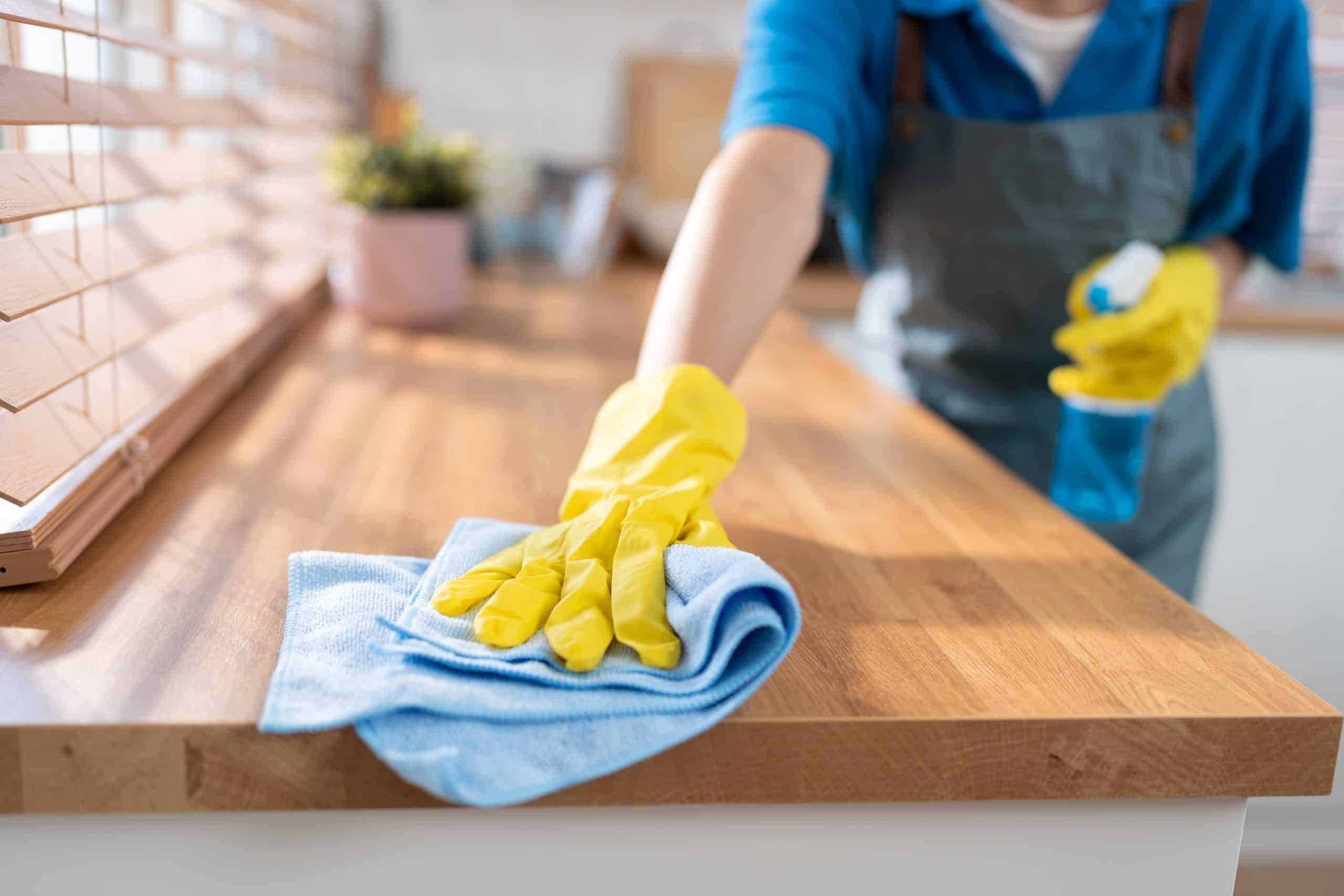
Start with immediate spill cleanup. Quartz resists stains better than granite, but letting liquids sit—especially wine, coffee, or anything acidic—creates unnecessary risk. A quick wipe prevents potential problems. Use a damp microfiber cloth for regular cleaning. These cloths lift dirt without scratching, and they don’t leave lint behind like paper towels sometimes do.
For daily cleaning, stick with pH-neutral products. Your countertop manufacturer probably recommends a range between 5 and 8. Anything more acidic or more alkaline can dull the finish over time, especially with repeated exposure. If you’re using dish soap, a tiny amount goes a long way. Too much soap leaves a film that builds up and makes your counters look cloudy.
Rinse thoroughly after using any cleaner, even mild ones. Residue accumulates faster than you’d expect, and that buildup is what most people mistake for their countertops aging. In reality, a proper deep clean often reveals the surface still looks nearly new underneath all that residue.
Don’t use abrasive scrubbing pads. Even “non-scratch” versions can create micro-scratches that accumulate and dull your finish. Soft sponges or cloths handle everything you need without risking damage. And never use steel wool, scouring powders, or anything marketed as “heavy-duty” for tough messes.
The biggest mistake in daily care is inconsistency. Skipping the wipe-down after cooking or letting spills sit overnight gives stains and residue time to set. A 30-second habit after each use prevents the problems that require professional intervention later.
Harsh Chemicals That Permanently Damage Quartz Surfaces
This is where expensive mistakes happen. Certain cleaning products cause immediate, permanent damage to quartz countertops, and many homeowners don’t realize it until they see discoloration or dullness that won’t go away.
Bleach tops the list. It breaks down the resin binders in quartz, causing discoloration that penetrates the surface. You can’t clean bleach damage away because it’s a chemical reaction, not a stain. The same goes for products containing bleach, including many bathroom cleaners and disinfecting wipes.
Oven cleaners and drain cleaners contain highly alkaline or acidic chemicals designed to dissolve tough buildup. They’re far too aggressive for quartz. These products can etch the surface, strip the finish, or create permanent dull spots. Even brief contact causes damage.
Paint removers and furniture strippers often contain solvents like trichlorethane or methylene chloride. These chemicals attack the polymer resin, potentially causing discoloration, softening, or surface degradation. If you’re doing any refinishing work in your kitchen, keep these products far away from your countertops.
Avoid oil-based soaps and cleaners. They leave behind a film that’s difficult to remove and attracts dirt. Over time, this creates a sticky, grimy layer that makes your countertops look perpetually dirty no matter how much you clean.
Vinegar and lemon-based cleaners seem natural and safe, but their acidity can dull quartz finishes with repeated use. While one application probably won’t cause visible damage, using these products regularly breaks down the surface gradually. Many DuPage County homeowners use vinegar to tackle hard water deposits from local mineral-heavy water, not realizing they’re trading one problem for another.
Abrasive cleaners like Comet or Ajax contain particles that scratch quartz. Even though quartz is hard, it’s not scratch-proof. Those tiny scratches accumulate, making your counters look worn and creating places for dirt to settle.
If you accidentally use the wrong product, rinse the area immediately with plenty of water. Quick action sometimes prevents permanent damage. But if you notice discoloration or dullness after using any cleaner, that’s likely chemical damage, not something you can fix with more cleaning.
Want live answers?
Connect with a Spark Maids LLC expert for fast, friendly support.
Care of Granite Countertops vs. Quartz: Critical Differences
Granite and quartz look similar, which is why so many people assume they need the same care. That assumption leads to damaged countertops and voided warranties. The materials are fundamentally different, and those differences matter.
Granite is natural stone—porous, heat-resistant, and requiring regular sealing. Quartz is engineered—non-porous, stain-resistant, but vulnerable to heat and certain chemicals. What works for one can damage the other. Understanding which surface you have determines everything about how you should maintain it.
The biggest care difference is sealing. Granite needs resealing every six months to two years depending on use and the specific stone. Quartz never needs sealing. In fact, applying sealant to quartz can cause problems because the surface doesn’t absorb it the way porous stone does.

Heat Resistance: Where Quartz Falls Short
Granite handles heat beautifully. You can set a hot pan directly on granite without worry. Quartz cannot handle that same treatment, and this is where many homeowners cause irreversible damage.
Quartz can withstand temperatures up to about 300 degrees Fahrenheit under normal conditions. But the real danger isn’t just heat—it’s thermal shock. When you place a pan that’s 400 or 500 degrees directly onto a room-temperature quartz surface, the sudden temperature change causes the material to expand rapidly. That expansion can crack the surface or cause scorch marks that penetrate deep into the resin.
The damage isn’t always immediate. Sometimes you’ll set down a hot pan and nothing happens. Then the tenth or twentieth time, you notice a crack near the edge or a discolored spot that won’t clean off. That’s because thermal stress accumulates. Each heat exposure weakens the resin slightly, until eventually it fails.
Crock pots, electric skillets, and other appliances that generate sustained heat pose similar risks. Even if they’re not as hot as a stovetop pan, sitting in one spot for hours transfers enough heat to cause problems. Always use trivets, hot pads, or heat-resistant mats under anything that generates warmth.
Edges and cutouts are especially vulnerable. The area around your sink or cooktop has less material supporting it, which means less ability to dissipate heat. A hot pan near a sink edge can cause cracking that spreads across your counter. Repairs for this type of damage often run $150 to $750, and severe cases require full section replacement.
In DuPage County homes, this becomes particularly relevant during holiday cooking when multiple dishes are coming out of the oven simultaneously. That’s when people get careless, setting pans wherever there’s space. One moment of distraction can cost you hundreds or thousands in repairs.
Stain Resistance and Porosity Differences
Quartz’s non-porous surface is one of its biggest advantages over granite. Liquids don’t penetrate quartz the way they can seep into granite’s porous structure. That makes quartz naturally more resistant to staining and bacterial growth.
Granite’s porosity means spills need immediate attention. Red wine, coffee, cooking oils—these can penetrate unsealed or poorly sealed granite within minutes. Once a stain gets into the stone, removing it requires specialized treatments and sometimes professional restoration. Even with proper sealing, granite demands vigilance about spill cleanup.
Quartz gives you more time. A spill that sits for an hour probably won’t stain quartz the way it would stain granite. But that doesn’t mean you should test those limits. Some substances can still mark quartz surfaces, especially if they’re left to dry and harden.
The non-porous nature also means bacteria and mold can’t penetrate quartz surfaces. They stay on top where regular cleaning removes them easily. Granite’s pores can harbor bacteria if the surface isn’t properly sealed and maintained. For DuPage County families with young children or anyone concerned about food safety, this difference matters.
However, quartz’s non-porous surface comes with a tradeoff. Because liquids don’t absorb, spills can spread across the counter more easily. A knocked-over glass of juice will puddle and run on quartz, while it might partially absorb into granite. Neither is better or worse—just different behaviors to anticipate.
The care difference shows up in daily maintenance. Granite needs pH-neutral cleaners to protect the sealant. Quartz needs pH-neutral cleaners to protect the resin. But granite can handle some products that quartz cannot, particularly when it comes to removing stubborn stains. Professional stone cleaners often use stronger treatments on granite that would damage quartz.
Understanding your specific countertop material prevents the mistake of following advice meant for a different surface. When you’re not sure which products are safe, stick with the simplest option: warm water and a soft cloth. That works for both materials without risk.
Protecting Your Countertop Investment in DuPage County, IL
Your countertops represent a significant investment in your home’s value and your daily quality of life. Protecting that investment doesn’t require complicated routines or expensive products. It requires knowing what damages your specific surface and avoiding those mistakes consistently.
Most countertop damage is preventable. Heat exposure, harsh chemicals, and improper cleaning techniques cause the majority of problems homeowners face. Once you know what to avoid, daily maintenance becomes simple and effective. But there are times when professional care makes the difference between surfaces that last decades and surfaces that need replacement within years.
With over 15 years serving DuPage County, we understand the chemistry of different countertop materials. Our ISSA-certified team knows which products protect and which ones damage. We use eco-friendly, pH-balanced solutions and advanced techniques that deep clean without harming your surfaces, removing the buildup that makes counters look dull and aged. For homeowners who want their investment protected properly, we prevent the costly mistakes that turn routine maintenance into major repairs.